

Clean Energy & Sustainable Development Are Leading Environmentally Friendly Practices for DirectAid’s Projects
DirectAid gives a priority to the projects that have an environmental impact and help in achieving the sustainability development. This is to magnify the benefit to all the related parties and the public interest in order to improve the poor and remote societies in Africa and eliminate the practices that harm the environment. The total environmentally friendly practices of DirectAid have reached 1,453 project benefiting more than 3 million person in Africa.
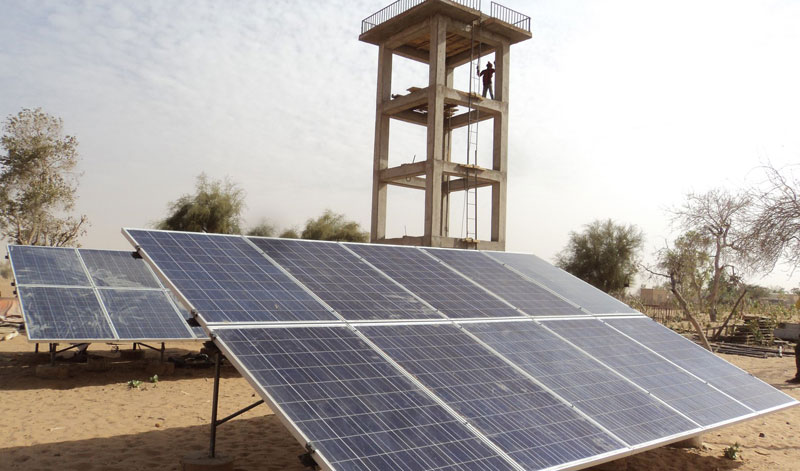
Applied solar panels projects
In this context, Dr. Abdullah Abdulrahman Alsumait, “General Director of DirectAid” has emphasized several environmentally friendly practices that DirectAid implements mainly in most of its projects. Firstly, solar panels for water wells, clinics and Masajid in order to benefit from the clean energy which does not harm the surrounding environment on the one hand as well as characterized by low cost, ease of access and solving the problem of frequent power cuts on the other hand. Therefore, DirectAid has executed 1,123 solar panels projects in 26 African countries, benefiting more than 2.5 million person.
Recycling projects
Secondly, DirectAid has implemented 126 projects of recycling plastic materials and paper, by employing some needy people in such projects and working on collecting used papers and make the recycling process to sell them to different companies in order to produce other useful materials. The benefit of such projects have reached 83,155 people in many poor African societies.
Saving energy
Thirdly, DirectAid has applied 95 electrical energy saving projects in various DirectAid’s facilities through utilizing LED economical lamps, using solar powered lights as well as changing all lamps into economical types, in order to reduce electrical energy consumption. These projects have benefited about 8,500 person in Africa.
Environmental awareness projects
In addition, DirectAid does not forget environmental awareness projects for its workers, students, orphans and others by organizing awareness sessions about the need of preserving environment and the importance of dealing with wasted stuff in a right way. Moreover, launching 98 afforestation campaigns and periodic cleaning campaigns for DirectAid’s centers, which benefited more than 22,000 person in Africa.
A unique solar energy experiment
Finally, Dr. Alsumait has concluded that by mentioning a new smart and environmentally friendly practice in Benin, where the traditional taps of wells were replaced by electronic taps powered by solar energy in order to obtain water by using cards. The beneficiaries must top up their cards at nominal prices to obtain the needed water. This would effectively stop wasting water and reduce well damages, and continue its work for a longer period due to rationalization of consumption. The general director has also emphasized on the continuity of creating such practices with other projects in order to develop the African societies. DirectAid welcomes suggestions for other environmentally friendly practices from its workers, partners and friends around the world.